The Cayenne EV is fat, it's not big boned
When Porsche announced the Cayenne EV yesterday, I went through the press release and noticed something weird: there was no mention about the weight of the new SUV. None at all.

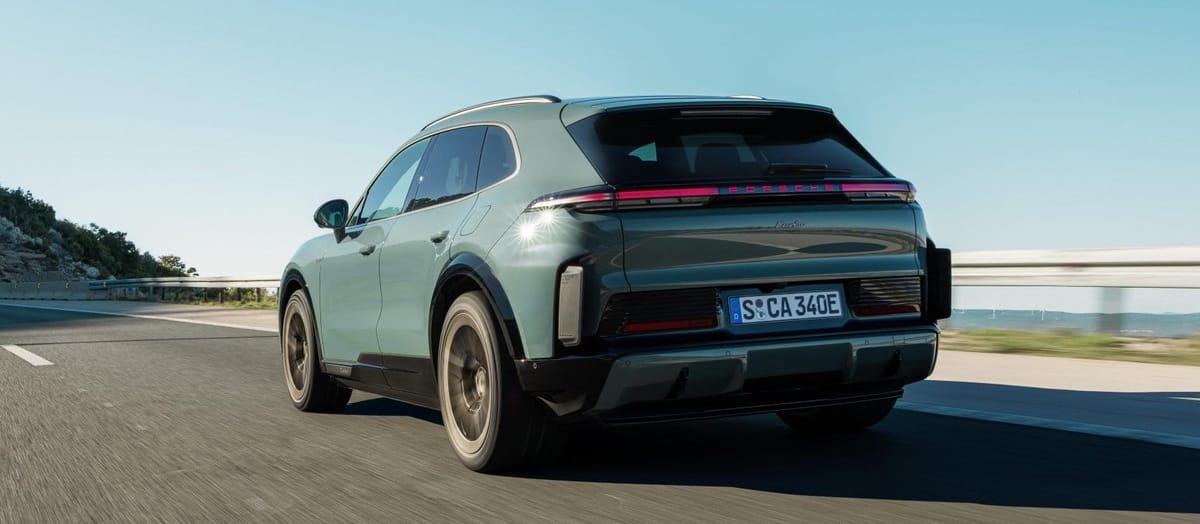
When Porsche announced the Cayenne Electric yesterday, I went through the press release and noticed something weird: there was no mention about the weight of the new SUV. None at all. That is especially strange for a brand like Porsche, which usually is very picky about sharing all the figures very clearly, because they matter.
I had to dig into the configurator on the website to find out the Cayenne Turbo EV is the heaviest Porsche ever. Weighing in at 2720 kg, which makes it 50 kg heavier than the previous record holder, the Cayenne Turbo E-Hybrid Coupé. The last one has a 4-liter V8 and lugs around a 25,8 kWh battery pack, while the EV only carries two electric motors and a 118 kWh battery pack.
I'm not going to pretend the weight is not an issue here, it is. It makes everything worse. And I'm not only talking about the obvious like efficiency here. Ride quality usually also suffers on obese cars. It's technically way more difficult to find a good suspension set up that can cope with the fat of the car, while still providing a nice ride. It often gets too harsh too quickly. For the record: I don't know how Porsche will handle this, although I'm expecting they do at least a good job.
All that aside, the Porsche is the latest example of the fact we don't seem to care about the weight of electric cars anymore. It's perfectly fine to compensate with some more power. Which Porsche also does. The electric Cayenne can produce almost 1.200 hp with overboast. An insane number, but at the same time, at the same company, the narrative is completely different when looking at the 911. The latest version didn't get a bump in horse powers, but was made more efficient in all other aspects.
Oh, weight (that's a bad play on words). I'm wrong, Porsche has had its eye on efficiency for the electric Cayenne. The heavyweight has flaps that come out of the rear bumper to aid in the aerodynamic performance of the beast (you can see them popped out in the image above). So all is good now. Move along.
Flaps aside, I admit I might be comparing apples and oranges here. But I still can't figure out why the Cayenne can't get the same treatment as the 911? Putting huge a SUV on a diet can be done. I mean, just look at Tesla. The company managed to cut about 200 kg from the Model X. How? By optimizing the drive train, batteries and interior trim and isolation. But still, 200 kg is quite a lot, but not as much as 500 kg.
That number came from the brand that has come to be known for making big and heavy cars: Bentley. Yes, hell has frozen over, a Bentley Continental has for the first time ever made weight at below two tonnes. To be specific here, it's not a regular production version, but a limited Supersports edition which will have a V8 without any form of hybrid or electric assistance.
If Bentley, of all brands, is adding lightness to their cars, so can and should Porsche. And so can and should all other car makers. And yes, I know all the shit that has to be put in modern cars because of regulations, makes them heavier than before. That doesn't mean that it all should just be added without any consideration.
Just because electricity is cheap and adding many, many horsepowers is easy, doesn't mean we should just forget about the good stuff less weight brings.
In other news:
One of the biggest Chinese car manufacturers is killing off one of the gimmicks it's been adding to their models ever since they started. BYD is no longer adding spinning touch screens to