The charging speeds are getting out of control
You're probably more worried about costs and which dirty truck driver has touched the fueling gun after he took a shit and didn't wash his hands.

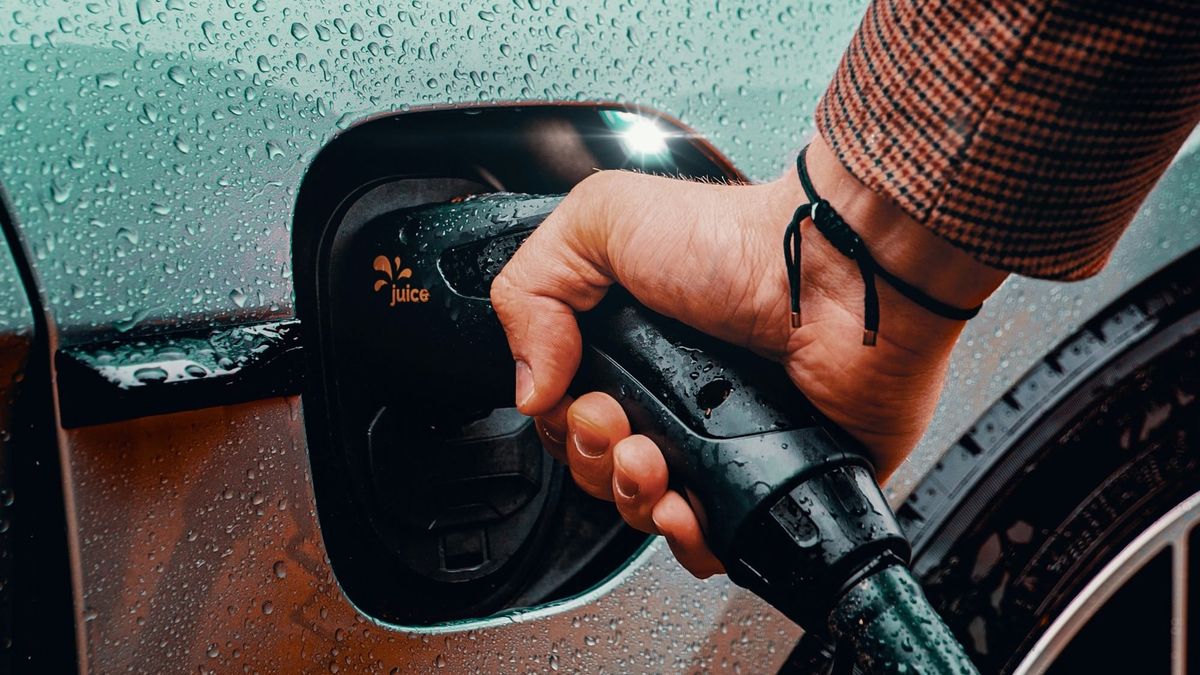
Did you know that it takes between 3 to 5 minutes to refuel a car? You probably didn't, but you guessed it correctly. I don't believe you've actually timed it, because you're actually a sane person and you couldn't care less about the couple of minutes you spend fueling. You're probably more worried about costs and which dirty truck driver has touched the fueling gun after he took a shit and didn't wash his hands.
Now guess how long it takes to charge an electric car. WRONG! Guess again. Nope, still wrong. One more try. Also wrong. You know why? Because nobody knows. Not even the car owner that is used to his car and developed a bit of a feeling for charging times during his time with the thing. It's dependent on so many factors, including weather, temperature, state of charge, the charger and how or if it works. But lately we've been going insane over charging speeds.
Ever since BYD came out with the Flash Charger and the claim it can charge a car from nothing to almost full in about nine minutes, the Chinese have set their laser focus on proving that BYD and their ultra fast chargers are actually losers. it can be done faster than the time you need to take a dump, not wash your hands, touch all the fueling nozzles in the fueling station and get back to your far superior EV and drive off fully loaded.
I've been typing up 'breakthroughs' pretty much every day for a month now. Mostly because someone claims to be a few seconds faster that the previous one. Other times because claims are misleading and clearly false. Either way, charging times are going down. CATL, the worlds biggest battery maker came through with another breakthrough today: 10 to 80 percent in 3 minutes and 44 seconds and 10 to 98 percent in 6 minutes and 27 seconds.
But those times don't really matter. No EV equipped with this battery will ever see those numbers in real life. Maybe she'll get close to them, which is significant enough in itself, but hit 3 minutes and 44 seconds on the dot? Nope, not gonna happen. What is interesting though, is the fact that the latest breakthroughs are alle being done with the shittiest battery-type of all: LFP.
It's the cheapest, heaviest and least energy dense type out there. In fact so much so, before it got used in cars, it was mostly designated to commercial vehicles. No car owner would want to drive around with this cheap stuff in their car while others out there had far superior batteries. But that changed when the superior stuff got so expensive, car makers had to go for LFP to keep selling cars. And look at the damned things now. Still low in energy density and price and very heavy, but also capable of faster charging than the good stuff.
It also helps LFP is a way more stable battery than the regular lithium-ion ones. it's less prone to catching fire and can handle damage way better without overheating. It's also not as touchy-feely about being charged fully or being drained completely. Which makes it a good base for manufacturers to push it beyond it's perceived capabilities without causing too much damage. Which I suspect is happening here to a certain degree.
I mean, it's not beyond Chinese manufacturers to push things a bit further than safely possible and not tell anyone about it until someone finds out. And than that certain someone still has to be brave enough and survive to tell others about the malpractice he or she has found. But that is neither here nor there.
Now, you can call me a pessimist, but what I'm trying to say here is that in a couple of years time all those incredibly fast charging cars will probably somehow have way more battery degradation than expected. There is simply no way around the heat being generated at those charging speeds. I mean, if BYD needs two charging guns to reach their numbers because they can't cool the cables and the guns enough otherwise, that is telling you something about the heat generation inside of the cars. The place where it's actually harder to control the temperature due to limited space and resources.
In other words: I'm fine with fast charging for up to ten minutes to get a decent amount of km's into the batteries. But I do think there is much more to be won in making EV's more efficiënt, than just adding big batteries and weight to get there. I'm not getting into a ultra fast charging EV just yet. I'll wait until the next 'breakthrough'. We're only just starting.
In other news:
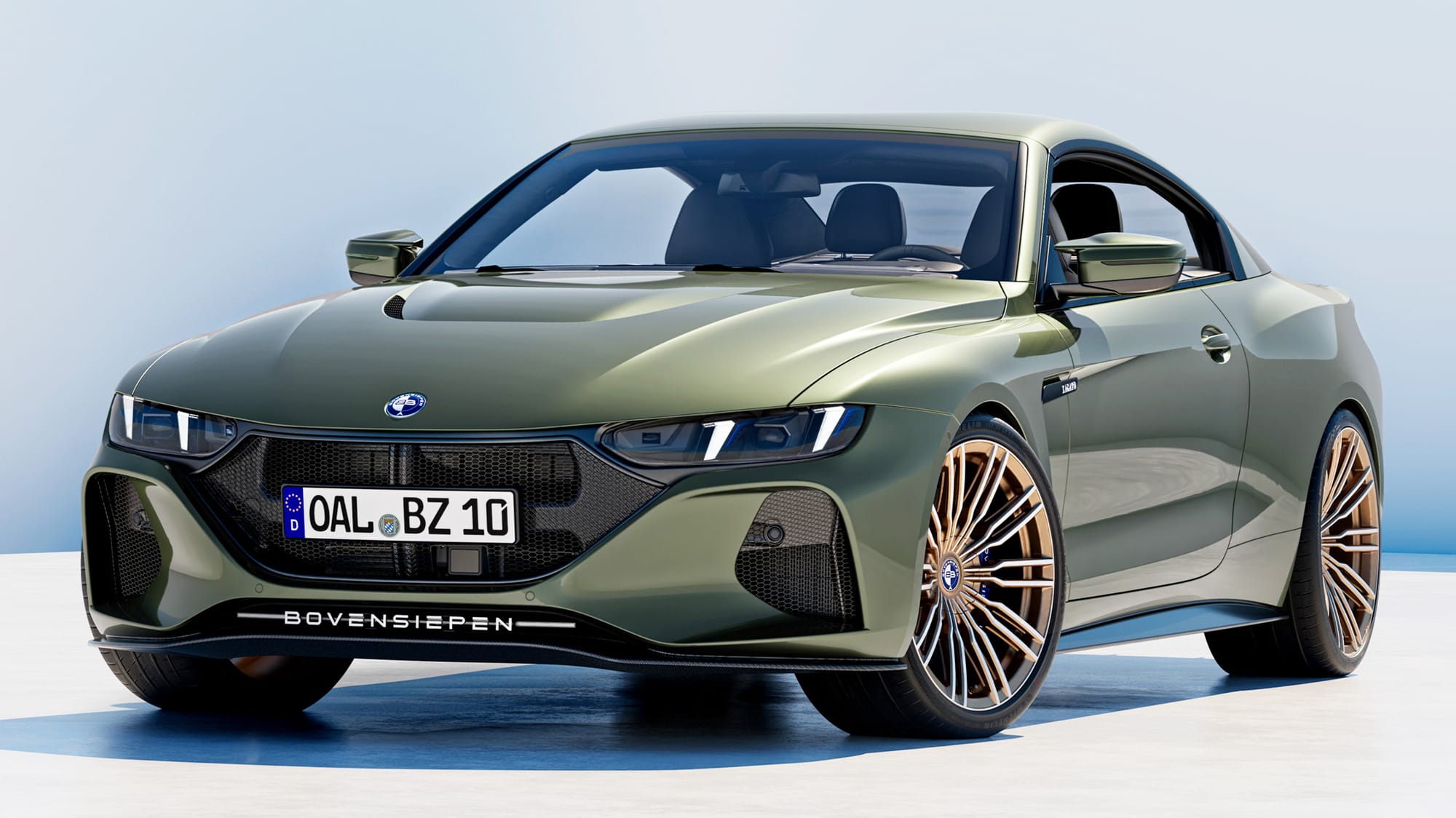
Did you see the new BMW Alpina M4 from the original makers Bovensiepen? Not yet? Well you're in luck, because here it is. Looks cool, right. It's an M4 with class, style and a good color. Even a better price, because you could also get, let's say, a Ferrari, a couple of Porsche's, a Lamborghini or a BMW for every member of you family for one of these Bovensiepen Zagato Coupe's. It's starting at almost an eye watering 370.000 euro's. And then the personalization still has to start...
If you didn't know: Volkswagen is working with Xpeng in an effort to take over the WORLD, ahum, the Chinese car market.But in the process it seems like it mist a part of the car they have just presented. It looks like the designer accidentally swiped the eraser across the front quarter panels of hte ID. Unyx 09 and forgot to press 'Command + Z' (on Mac, it's CTRL +Z on Windows) before sending it off to production.
In other VW-news: there is a new Jetta. Yay! It's an SUV. Boo! But it kinda looks cool. Yay! And it's only for China. Boo!
Just a hint as to why I'm not yet getting on the fast, faster, fastest charging band wagon. CATL, you know, the ones that showed us the LFP-thing also showed this: a high energy density, low weight and fast semi-solid-state battery. It's not ready for production, but it's 255 kg lighter than an equivalent LFP-pack and 112 liters smaller in volume. That means less weight, better vehicle dynamics, more range and even faster charging. As I said, where only at the beginning. Be patient.