Ya'll got any more of that range...
Erev's are becoming a new norm in the car world. And that is stupid. Here's why


You greedy f*ck. Yeah you, dear reader. Something is very, very wrong with you. I think. I might be wrong. But I guess I'm not. Know why? Because you're wanting more of that range. A lot more a thousand kilometers isn't even enough anymore. You need moar, MOAR!
Just kidding. As my dearest reader, I know you're a very humble, kind, lovable, and well thinking person. You know when you have enough. You know where to draw the line and to not overspend on something which you will never, ever use. But you and me, we're part of a select few. The rest of the world seems to always need more range. And the Chinese are supplying it happily and at a discount.
Erev's are becoming a new norm in the car world. Extended Range Electric Vehicles, I mean. Or in simpler words: and battery electric vehicle which has a gasoline power generator strapped to the back. It charges the battery while driving, so you can get further than on electric power only. It might be me again (it is probably just me again), but I'm noticing a weird mismatch in culture going on here.
You see, in China, where the erev is gaining ground, this type op car makes sense. Electric cars dominate the market, but only in cities. Charging in the densely populated area's is easy and trips are relatively short. That means EV's are easy to live with. Outside the cities finding a charger is hard, especially since infrastructure is lacking and distances can be very, very long. A regular EV's is not even an option, but an erev is, because you can fill it with petrol, and charge wherever you want, charge whenever you can and not worry about getting to the destination, which can be very, very far away. In case you forgot: China is huge and trips can take days.
The Chinese building erev's makes perfect sense. It's a stop gap until charging infrastructure is build up. When that is done, which will probably be a lot sooner than you'd expect, the EV can take over.
In the EU, where the Erev is getting more and more attention and interest from potential buyers, all of the above is not applicable. Charging infrastructure is mostly fine, with the exception of a few places, and distances are usually not that large. The EV's with ranges of 700 to 800 kilometers are more than fine and there is no need to charge them with a petrol power generator, because in those 700 to 800 kilometers you'll definitely come across a fast charger that does the charging, well, faster.
Also, in the olden days, by which I mean yesterday or maybe last week, we didn't seem to need a thousand kilometers of range. In fact, most petrol cars usually have a range of about 500 to 600 km on a full tank. Diesels, which are almost banned here in the Netherlands, did sometimes reach a 1.000 km, but those where for the select few. So how come the people that are now driving 500 to 600 km range cars all of a sudden need a 1.000 km of range? Where did the need to go twice as far come from?
And yes, I know charging an EV is a hassle. Or it can be if you plan it wrong. It doesn't have to be if you plan it right. And yes, I also know it's better if you have to charge less, but charging is cheaper that filling the tank with petrol. And the margins between the two are getting larger by the day thanks to that Orange American Knob.
Which brings us full circle: the Erev looks like a mighty fine car in which you can go places you haven't reached before. But getting there means sacrificing on efficiency on every other trip you take. Why? Because you're lugging along an unused petrol engine, a full tank of petrol and an exhaust system. Those weigh quite a lot and more importantly, take up valuable space which you can't use to stuff kids or old people in.
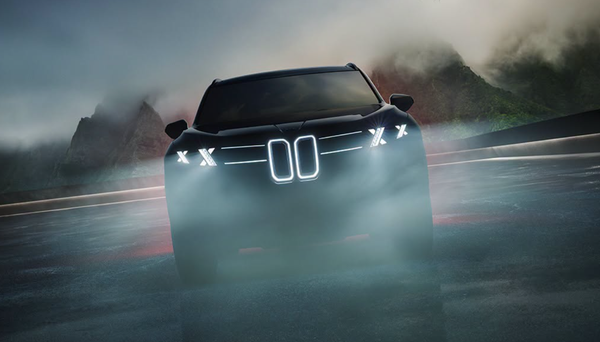
And then there is the European solution to the almost non-existent range issue: moar battery's, means moar range. Case in point: the upcoming BMW X5, which will have almost 150 kWh of battery's (around 142 kWh net) stuffed between the wheels, to make it go at least 800 km, at most 1.000 km.
Again: these are not real solutions. Smaller, lighter and better batteries are coming. They will increase efficiency on multiple levels and be fast enough to charge. The Erev and the X5 are just products for the people getting high on range.
In other news
Good times over at Rivian, it seems. The car maker is planning new models of the already popular R2. CEO RJ Scaringe hinted to a R2X, but didn't want to spoil the plans for the line up. Which is weird, right? Why the hell not? Tell us what's coming. Or even better, show us. Especially us Europeans, so we know what to wait for when the R2 finally gets shipped here. Make us want your stuff so bad, we won't even think about buying the Volkswagen ID.Polo or stuff like that. (RJ, I'm available to help at the marketing department).
There is some more Rivian news, combined with something I heard from Lucid: the self driving thing seems to be very popular out there. Lucid is getting heaps of attention on the collaboration with some AI/self driving rig supplier, and Rivian is already doubling down on creating their own self driving stack. But the last one is also now thinking about building their own sensors and LiDAR. Which seems way to expensive for stuff nobody seems to want or need. So the question is: what do there car makers know what we, the people that are supposed to buy/rent/hire those things, don't? Or what are they not telling us...